Introduction: a European crossroads The European Union is currently facing a crucial moment: the Cannapol project is not just a regulatory proposal, but a potential watershed in the decades-long debate between prohibitionism and cannabis regulation. The barriers that have long limited the political discourse on “soft drugs” are dissolving: the EU is working to offer a coordinated vision, based on scientific data, impact assessments, and models that can be replicated in different Member States. The European context and the cultural leap Cannabis is currently the most widely used illegal substance in Europe, and no Member State has full and uniform regulation. The Cannapol proposal was created with the aim of building a European “toolkit” to help States structure coherent, but not rigid, national laws. Among the key points envisaged: The idea is to avoid each country proceeding blindly, with misaligned and contradictory regulations. A significant signal: the European Agriculture Commission has recently approved amendments recognizing the full use of the hemp plant (leaves, flowers, stems) if from certified low-THC varieties. This decision aims to overcome national restrictions and anticipate a coherent framework at the community level. Prohibitionism in Italy: obstacles and contradictions To understand the scope of the possible change, it is worth looking at Italy, where prohibitionism has maintained a strong grip for decades. Thus, while regulatory models and pragmatic discussions are emerging in Europe, a deep divide remains in Italy: prohibiting what many consume, criminalizing agricultural operators, and ignoring the scientific community. The challenges and risks of Cannapol The Cannapol project is ambitious, but it is not immune to risks: The potential impact: from symbol to real change If Cannapol manages to embody its intentions, the repercussions could be profound: In Italy, the arrival of a European framework would push towards the revision of outdated laws, the easing of prohibitionism, and the transformation of a marginalized sector into an economic and social lever. The Cannapol project represents a historic step: the EU is not just testing a reform, but is trying to lay the foundations for a new way of viewing cannabis regulation. It will not be easy, there will be resistance, but it is now clear that the era of total prohibitionism is coming to an end. If you want, I can prepare a vector graphic for the cover (recommended sizes for social and print) or an adapted version for Instagram ready to post. Would you like me to make it?
Some experts – including Stephen Murphy – point out that to be credible, Cannapol will need to provide for real dialogue with stakeholders, not just symbolic consultation.
States with conservative views and moral ties to prohibitionism may remain resistant, hindering the full adoption of guidelines.
Each regime will need to prevent the legal market from once again benefiting unregulated actors; strict controls, constant monitoring, and harm reduction tools will be needed.
The balance between individual freedom and the protection of public health will be one of the most delicate issues: it will be necessary to manage THC limits, restrictions on access for minors, preventive information, and rigorous traceability models.
Cannapol, according to previews, will also critically analyze what has been done across the Ocean: regulatory choices in the USA have not always been based on robust evidence.
Copyright © 2025 | ALL RIGHTS RESERVED WWW.CARLITOSWEED.AMSTERDAM

The EU towards a historic turning point: the Cannapol project for common rules on cannabis
The EU towards a historic turning point: the Cannapol project for common rules on cannabis
2025-10-10 07:05
2025-10-10 07:05
Array() no author 93111
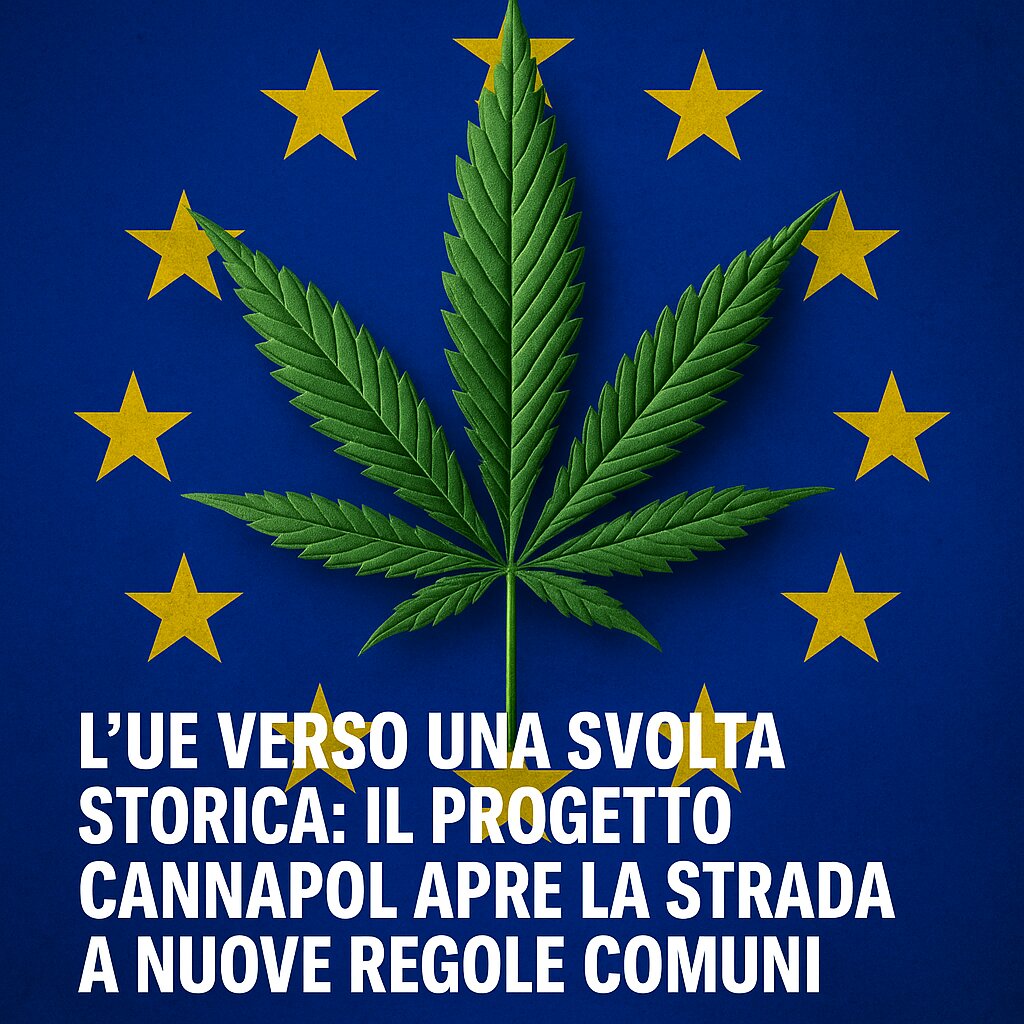
⸻ “The EU opens up to change: the Cannapol project could mark the end of prohibitionism and create common rules on cannabis throughout Europe.”
Copyright © 2025 | ALL RIGHTS RESERVED WWW.CARLITOSWEED.AMSTERDAM