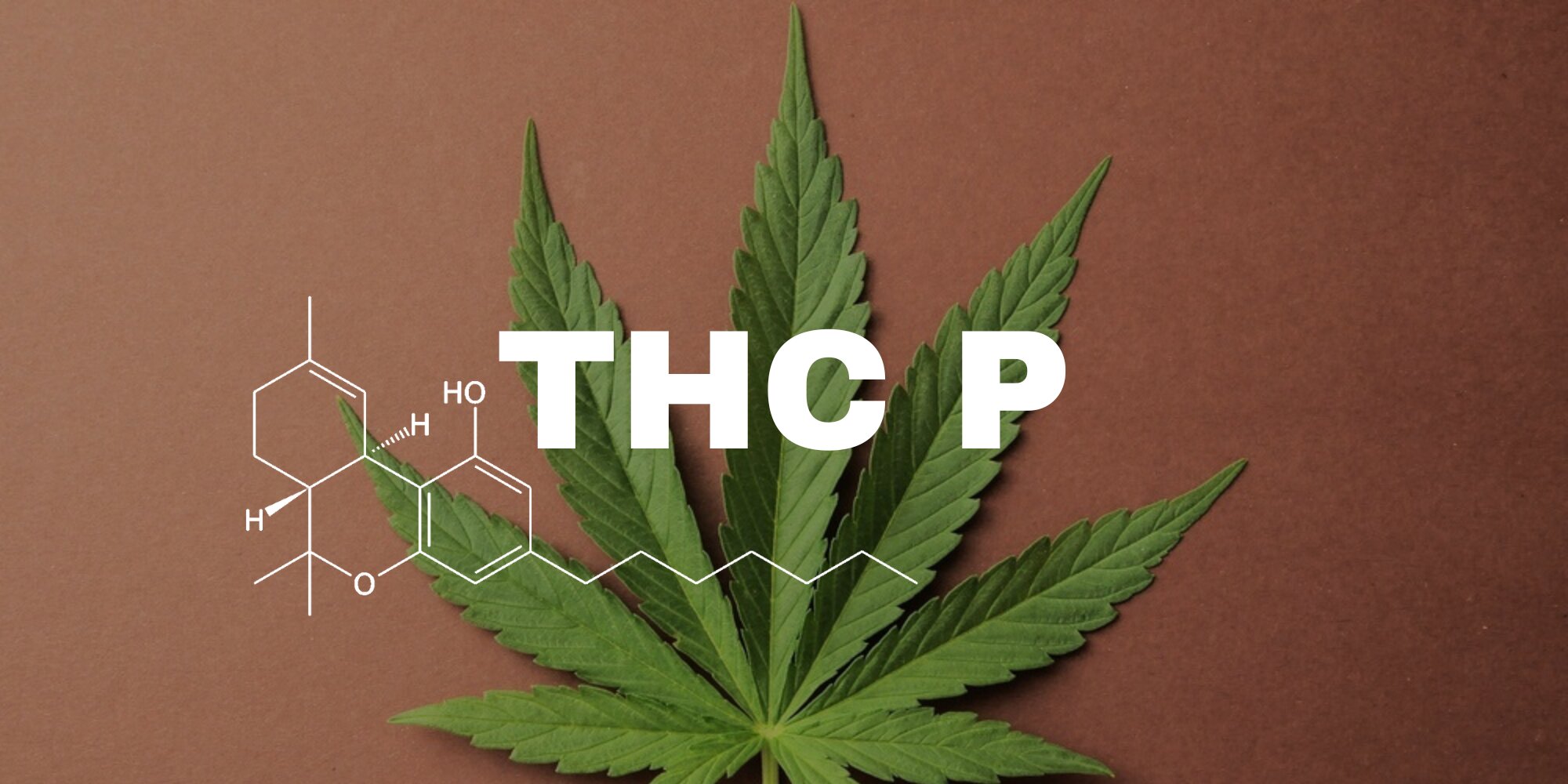
THCP, a phytocannabinoid naturally present in cannabis and similar to THC, the main psychoactive component of cannabis, was recently identified in 2019 by a group of Italian researchers. It is one of over 120 cannabinoids discovered so far in the cannabis plant, with many more potentially yet to be discovered. What particularly intrigues the cannabis community is the possibility that THCP may have a greater influence on the psychoactive properties of a cannabis strain than THC itself. This article explores the limited information currently available on this newly discovered cannabinoid. What is THCP? Delta-9-tetrahydrocannabiphorol, or THCP, is a cannabinoid closely related to THC and present in very low concentrations in the cannabis plant. According to the researchers who discovered it, THCP interacts with the endocannabinoid system in a manner similar to THC, but with a much greater affinity for cannabinoid receptors. Research has revealed that THCP binds to CB1 receptors up to 33 times more often than traditional THC, which means that THCP is potentially up to 33 times more potent than THC. What makes THCP unique is its long alkyl side chain: the chain of carbon atoms is much longer than that of traditional THC (seven carbons versus five). This allows the cannabinoid to attach more firmly to receptors throughout the body. As a result, a much smaller amount of THCP is needed to influence the various functions governed by the endocannabinoid system (ECS) and achieve the same effect as THC. Potential uses and benefits THCP is still new in the world of cannabis and currently there are no studies that go beyond the observations made by the original team who discovered this cannabinoid. Nevertheless, the evidence and potential medical applications are promising. THCP could offer greater pain relief to patients who require high levels of THC for their treatment, such as those who currently use CBD oil to reduce cancer-related pain. Higher levels of THC-P could also produce sedative effects similar to high doses of THC and are potentially able to relieve insomnia or reduce intractable pain. However, there is no concrete evidence of how THC-P exactly affects humans or which strains may contain higher levels of this cannabinoid. Moreover, although many have described THCP as a more powerful or "pronounced" effect compared to THC, there is no definitive proof that this cannabinoid is more potent when consumed. Risks and potential side effects of THC-P In the absence of available research, patients should use great caution in considering THCP as a potential medication until further information is available. THCP is 33 times more capable of binding to CB1 receptors than THC, which means that psychoactivity is greater, even with lower doses. One could consume an excessive amount of THCP and experience unwanted side effects such as dry mouth, dizziness, or lethargy. It should also be remembered that THCP is generally present only in small concentrations in cannabis. As a result, it is difficult to say what impact this cannabinoid has on the overall effect of cannabis. It is hypothesized that THCP could be one of the reasons why some cannabis strains are much more potent than others, even with similar or lower THC concentrations. However, there is no definitive proof of this concept. Is THCP legal in France? THCP is one of the recently discovered cannabinoids and remains largely unexplored. The question of its legality therefore remains uncertain. It is not classified as a controlled substance, but neither is its commercialization explicitly authorized. Currently, in France, legal uncertainty allows the sale of products containing THCP, provided that the THC content is below 0.3%. However, as with all cannabinoids, legislation may vary from country to country. THC vs THC-P: what are the differences between these cannabis components? From a chemical point of view, delta 9 - THCP is similar to THC, except for the slightly longer carbon side chain. While THC has 5 carbon atoms in its molecular structure, THC-P has 7. These extra atoms increase its affinity with the CB1 and CB2 receptors in our body. As a result, THCP reaches CB1 receptors 30 times faster than THC and CB2 receptors 5 to 10 times faster. Its extended structure also allows THC-P to bind more easily to receptors, giving it greater potency and more immediate effects compared to THC. Do you want to buy THCP? Discover our flowers and other products in our online store.
Copyright © 2025 | ALL RIGHTS RESERVED WWW.CARLITOSWEED.AMSTERDAM

THCP Delta-9-tetrahydrocannabiphorol, what is it?
THCP Delta-9-tetrahydrocannabiphorol, what is it?
2024-01-18 09:24
2024-01-18 09:24
Array() no author 93111
thc, cbd, cannabis-legale, nuovi-cannabinoidi, thcp, cbn, h4-cbd,
Copyright © 2025 | ALL RIGHTS RESERVED WWW.CARLITOSWEED.AMSTERDAM